Interview with Andy Ward, Project Manager, Chief Seattle Club Re-entry Program
A three-year partnership between the Chief Seattle Club (CSC) and Northwest Justice Project (NJP) has helped Native Americans rebuild their lives after incarceration.
Based in Seattle and Renton, the CSC Re-entry Program has supported hundreds of people. It has connected them to their culture and community, supported sobriety, found housing and jobs, and other life necessities. The program’s Welcome House has provided temporary housing for nine men, hosts a sweat lodge on the property, and connects people to Indigenous culture.
Crucially, the re-entry program also links community members to NJP, for help in dismissing the burden of Legal Financial Obligations (LFOs—fees and interest related to court proceedings). Often times, removal of LFOs is the key that opens doors for housing, jobs, and fresh starts.
Andy Ward, Project Manager for the CSC Re-entry Program and NJP attorney Robert Curran have worked closely together, ensuring that community members have the full wrap-around support needed to re-establish stable, meaningful lives.
Here, we interview Andy Ward about the program and the partnership with NJP. Although the CSC Re-entry Program will end on December 31, 2024, both Andy and Robert look back with pride on all they and their two organizations have achieved, and look forward to finding new ways to support Native American re-entry.
Andy Ward, Project Manager for the Chief Seattle Club Re-Entry Program
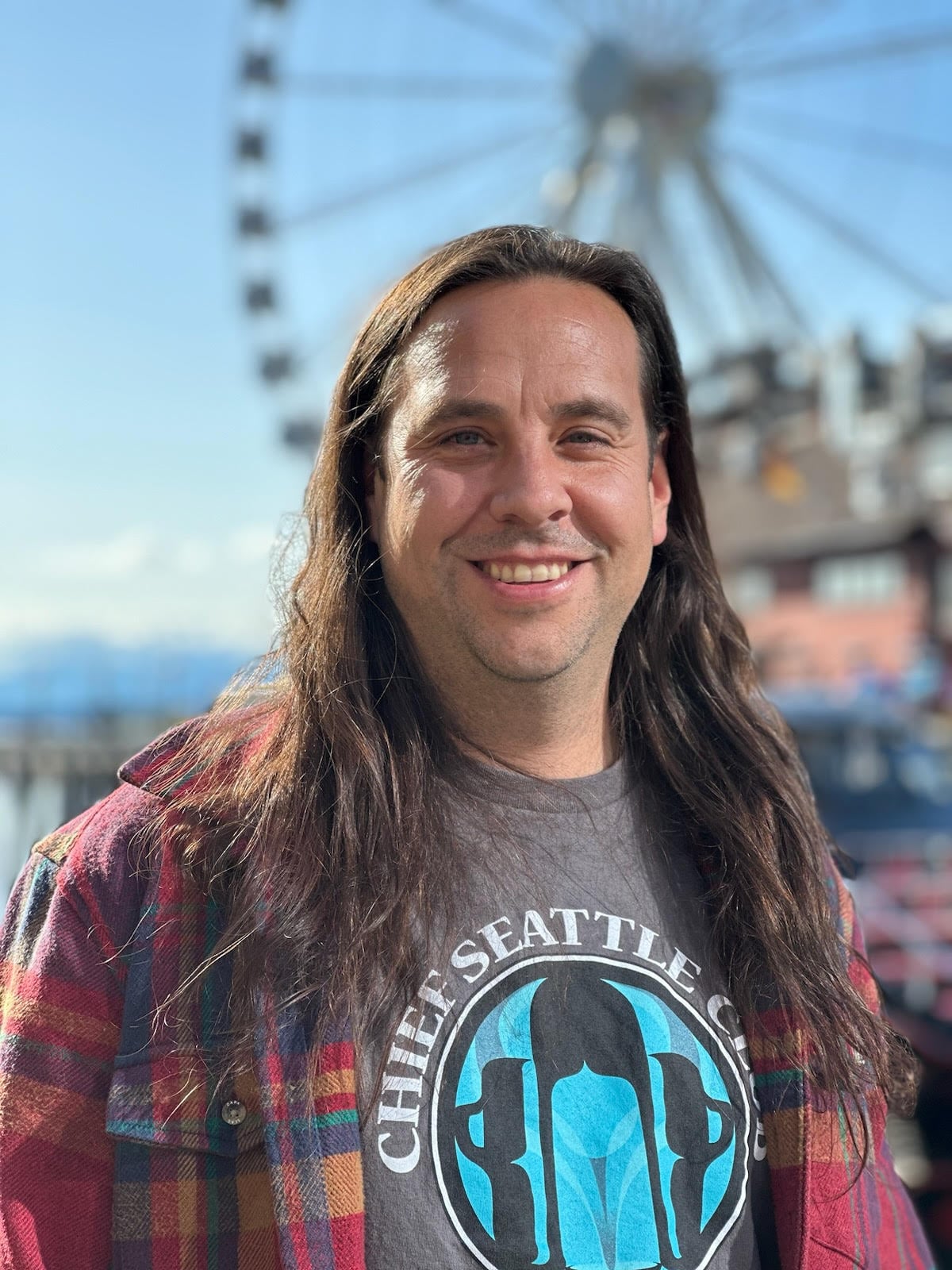
Could you tell us how the program works?
Our program is designed to remove barriers that confront Native Americans who have been incarcerated. When people come to us, we start with a simple question: “What do you want to do? It could be anything positive—job training, skill certification, staying sober, getting started in college. We can get you started, that’s our job, to remove the barriers, then it’s up to you.
After one gentleman recently got out of prison, and I asked how we could help, all he wanted was a coat and help with his LFOs. NJP reduced his court fees, and I'll make sure to zero out what's left with our remaining program funds. He was goal-driven, stayed sober, got an apartment and a job on his own.
As of October, we've served 520 people in the past three years alone (the program started five years ago).
How has the partnership with Northwest Justice Project (NJP) evolved?
The first year, we had an agreement where NJP would help people with their LFOs—court fees and interest. It’s a huge barrier you can never get rid of on your own, it just keeps getting bigger and compounding. But at first it was challenging to get people to engage because they were focused on immediate needs like jobs and housing. Some owed over $100,000—it was so much money it wasn't even on their radar.
But then community members started reaching out to NJPthey started making the call. We had one guy who owed over $100,000. NJP knocked that down to about $17,000, and the CSC program was able to pay it down to zero. Another owed over $80,000, which NJP reduced to about $15,000, and we zeroed that out too.
Even after the initial funding changed, NJP stayed committed. They wanted to continue this good work. Now, whenever I do an intake with someone new, I ask if they owe court money, and if they do, I connect them with NJP.
Can you share how the program helps people in their daily lives?
Sometimes it's the simple things that make a huge difference. A gentleman called me after the bomb cyclone in November, saying they'd lost everything—no heat, no way to cook. He asked if I had some propane. We happened to have a propane tank from our Welcome Home house, and a pile of firewood. He was so grateful.
And the connection is always there. People who participated three years ago still call me. Just recently, a guy who changed jobs needed clothing and gear for working in subzero temperatures. He’ll be working in a deep freezer. No problem. Through our community connections, I got him what he needed.
How does culture support people through these challenges?
Barriers to stability and re-entry add up. Coming out incarceration everyone’s on different paths. What we have in common is our culture and also, many of us are trying to stay sober. Having a community of people that honestly support each other on culture and sobriety is super important. When following the Red Road and living a good life you need that connection. Everyone needs it at all levels. I get the most support from guys that I’ve helped, guys that give me words of encouragement.
Indigenous cultural programming is huge for us. When life is overwhelming, you need time to celebrate yourself and your culture and feel connected. Sweats are helpful on so many levels. They help you stay connected and sober. The Welcome Home house sweat lodge is often full—shoulder to shoulder, cheek to cheek.
Whether it's making art, working on regalia, or joining a drum group, there are endless ways our culture helps us. It's what draws people to our program.
As the program comes to a close, what insights would you like to share?
This partnership with NJP changed people's lives—that's just a fact. What made it work was communication. NJP always took my calls, and I always took theirs. They really wanted to be involved, coming to our office to present to groups, meeting us in the community.
After the program ends on December 31, 2024, I’m keeping the phone number and the connections going, somehow, someway. Just today, I got a call from a counselor at a prison about someone releasing next year. Their dad went through our program, and now they want to. While the program is closing, I can still connect them to sweat lodges, clothing vouchers, work sources.
A lot of men, especially those who've been incarcerated, don't like asking for help. Sometimes I have to push them. But when they succeed—that's what this is all about.