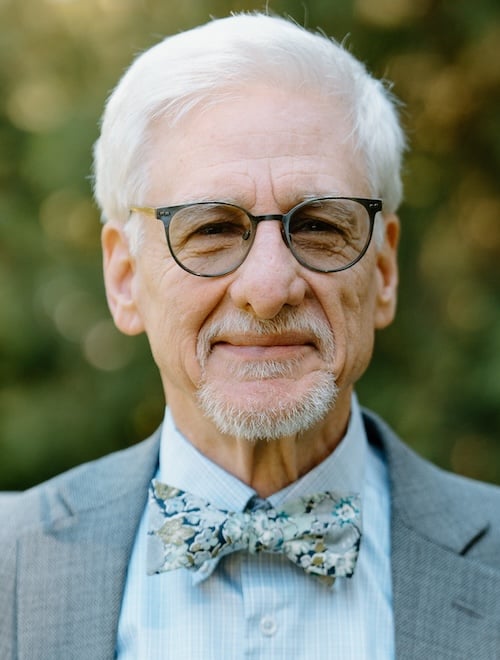
After Craig drew #8 in the Vietnam-era draft lottery, he enlisted in the Coast Guard. He spent much of the next eight years doing search-and-rescue work, marine environmental protection, and port safety assurance — work that would come to define his life in ways he couldn’t have predicted.
Roughly four years ago, he began to experience strange neurological symptoms: smelling things that weren’t there, hallucinating, problems with memory.
He went to a neurologist. Several appointments and diagnostic tests later, Craig learned that he had Parkinson’s disease. There was no family history of the disease. Looking for an explanation, Craig began piecing together his service record, connecting the dots between the diagnosis and years spent monitoring hazardous sites.
Chemical spills and train derailments
“I was traipsing around in the mud in the hollers of West Virginia — chemical spills, train derailments, transfers at a chemical plant, conducting investigations, monitoring cleanups,” he says.
One posting stood out: “I inspected the only United States plant that manufactured Agent Orange, in Nitro, West Virginia. The only other was the one that exploded in Bhopal, India. I inspected many facilities in Charleston, West Virginia, right along the Kanawha River — the chemical capital of the world.”
The connection between the Parkinson’s and the chemical exposure during his service slowly came into focus, even as his symptoms worsened.
Although he had few of the motor control problems typically associated with Parkinson’s, the disease brought less obvious symptoms, including problems with memory that forced him to retire early from teaching. “I would be standing in front of a class and not remember what I had said.” Craig has REM sleep disorder making him act out in his sleep. “I’ve woken up pulling the electric blanket cord, thinking I was pulling myself out of a ditch.”
Craig developed severe depression. Even small, strange moments became part of daily life: “People with Parkinson’s often sense their dog is with them. I’ll be typing and be certain my dog is next to me, and she’s not there.”
Try and try again
He applied for veterans benefits but was declined. He would have taken a no for a no but his wife suggested that he visit the King County veterans’ office in Tukwila, which in turn recommended he reach out to Northwest Justice Project (NJP). He was soon working with NJP’s Caitlin Emmons, an attorney with the Veterans Unit.
He provided Caitlin with detailed lists of his past chemical exposures, and extensive research on each chemical and its potential links to Parkinsons. Then, he applied again for Veterans benefits. Months of silence from the VA followed.
“Caitlin was cautiously optimistic. I was pessimistic… with the current administration’s layoff of 80,000 employees at the VA, I couldn’t imagine an already-struggling organization handling my claim well.”
Then the letter came. “I was thrilled when it went through and I got an 80% rating — the maximum I could have expected.” The rating means more than a monthly disability check backdated to his original letter of intent. “Now I know that as my disease progresses, I’ll have 100% VA healthcare,” he says — including, eventually, residential and respite care for his wife and caregiver.
Craig reflects on what would have happened without NJP’s legal services. “I have a doctorate and a lot of experience with bureaucracy, yet there’s no way in the world I would have been able to do this without help,” he says. “People need advocacy — they need informed advocacy. They need a guide.” Without Caitlin, he’s certain: “If not for Northwest Justice Project, I would have given up.”