Champion for the Educational Needs of Washington’s Children
An interview with NJP Youth Law Attorney Mary Griffin.
Q: Why have you chosen to represent families of students with special educational needs?
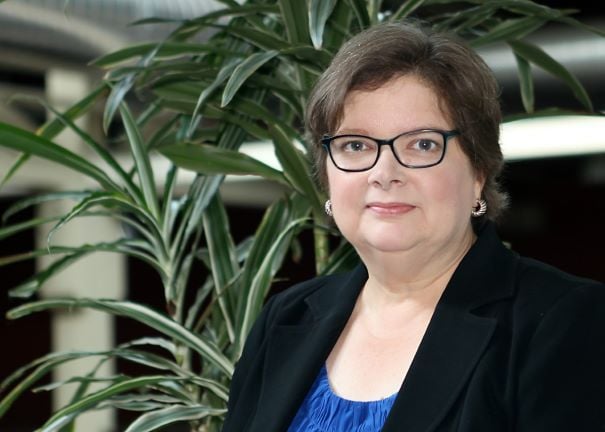
As the mother of a child who had special educational needs, I know first-hand how difficult it can be to get those needs met, and the emotional, financial, and social challenges involved. These issues directly impact families’ stability and the long-term well-being of their children. Almost 15% of students in public schools in Washington require an Individualized Education Plan, or IEP. But proper implementation of an IEP is far from assured. There’s a profound need for legal assistance to ensure the educational rights of children with learning and behavioral disabilities.
Q: What is the biggest issue you deal with in your advocacy for parents and children with learning disabilities?
An IEP is a cornerstone for a student with a disability—it outlines their educational goals and the accommodations they need. It is a critical part of federal law – the Individuals with Disabilities Education Act – but enforcing it is a huge challenge for parents. They often don’t receive the data they need to understand how it is being implemented and how their child is advancing. They face bureaucratic, slow-moving channels when seeking accountability. During the pandemic, this became impossible, especially hard as remote learning became the norm.
Parents and children are still trying to catch up for lost educational opportunity. Parents see their child falling behind, struggling, but are told everything is fine – or they are blamed for their child’s difficulties. They don’t know if or when the paraeducator (a dedicated teaching assistant) is in the classroom. One client was even blamed when she couldn’t get her child to physical therapy during the pandemic shut down!
Q: How does the burden of non-compliance with an IEP typically impact the students and their families?
It means the mother must spend a lot of time advocating for her child, a lot of time writing emails, going up the chain of command in the school district, trying to find someone in the school bureaucracy who might be able to help them.
Additionally, the frustration the child feels in school spills over into the home. A student may barely be keeping it together in school and come home and have a huge explosion. There are often a lot of mental health problems related to lack of success in school. Anxiety and depression are a huge issue for students and families.
It also has a big economic impact. Parents often cannot hold a job if they must spend endless hours advocating for their child. The challenge of effectively taking care of her children and their needs and holding down a job can become overwhelming. Single mothers especially may end up homeless. I have had four clients who have become homeless as they struggled to advocate for their child. It is heart-wrenching.
Q: What are some of the main ways in which you advocate for your clients?
We tackle issues head-on in several ways. We may begin by attending IEP meetings with the school district to advocate for what the student needs. Sometimes we pursue community complaints (written statements alleging that a special education rule or law has been violated) with the Office of Superintendent of Public Instruction (OSPI). Occasionally, we may file for a due process hearing against a school district in front of an administrative law judge.
We listen to what parents and youth say about a student’s needs at school. We request the necessary data and records from school districts to develop meaningful IEPs and hold districts accountable. We may obtain an independent educational evaluation for a student. In one case, this yielded a diagnosis of autism, which unlocked the doors for additional support such as speech therapy or behavior therapy.
Q: How does your work fit into NJP’s broader mission?
Every child should have access to a free appropriate public education. Overall, the school system is set up to educate students who come from middle to high income white households, who do not have disabilities, and do not have unexpected behaviors. Students who do not fit that mold are at a distinct disadvantage in this system.
According to the last civil legal needs survey by Washington’s Office of Civil Legal Aid (OCLA), over 12% of low-income Washingtonians reported unmet civil legal needs related to education, signaling the essential role of our legal services in the broader fight for justice. Education is a fundamental human need, and our work directly correlates with NJP’s mission to combat injustice and protect human dignity.